


No products in the cart.
Return To Shop
What would be more soul satisfying than to deep dive into plate of steaming idlis or crispy dosas, accompanied with coconut chutney and sambar?
There was a time I couldn’t think of anything that could change my mind about idli and coconut chutney with sambar. And that’s when it happened. I was suddenly brought face to face with a traditional Podi or Gunpowder masala. It was mixed in hot sesame oil, poured over steaming idlis and BOOM! I was not the same person anymore. I had literally changed and evolved as a human and found meditative levels of happiness that was previously unimaginable. Yes, I still crave sambar and coconut chutney, but Podis are a truly wonderful accompaniment to idlis and dosas and uthappams. They had a bit of heat and flavour to the humble, plain, healthy idli and really give you the kick you need.
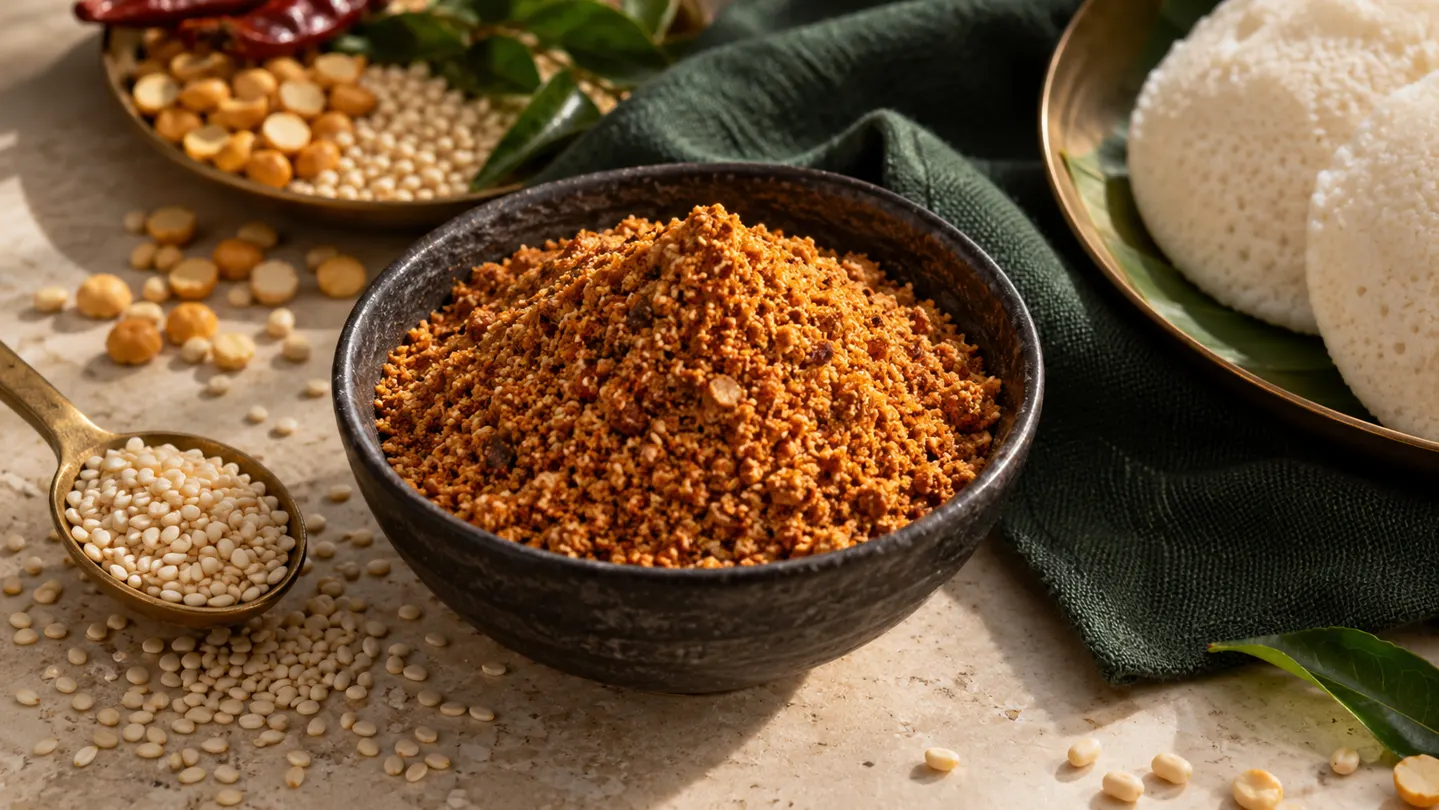
Understanding podi nutrition
Podi is a flavourful condiment, and its nutrition depends on the blend. Lentils, sesame, coconut, rice, spices and salt contribute differently to each recipe. Read the nutrition panel and ingredient list on the specific pouch rather than assuming all podis have the same values.
Look at the amount you actually use
Nutrition values per 100 g are a useful comparison, but a sprinkle of podi is a much smaller amount. To work out a nutrient for your portion, multiply the per-100-g value by the grams you use, then divide by 100. Account separately for any ghee, oil or other ingredients you add.
Use podi for flavour as part of a varied meal. It should not be presented as equivalent to a concentrated protein supplement or as a treatment for digestive symptoms. Check the pouch for allergens, salt content, storage instructions and the best-before date.
Explore Rapidli’s regional podis to compare the individual product information, and visit How to Use Podi for everyday serving ideas.
Want to understand what podi is and why it is called gunpowder? read it here.


Related posts

Get to know black and yellow mustard seeds, from their flavour to the dishes they suit.
Learn when salting vegetables early helps, and when to wait until they're cooked.

What Do Cloves Add to an Indian Masala? with practical tips for everyday cooking.
Add comment